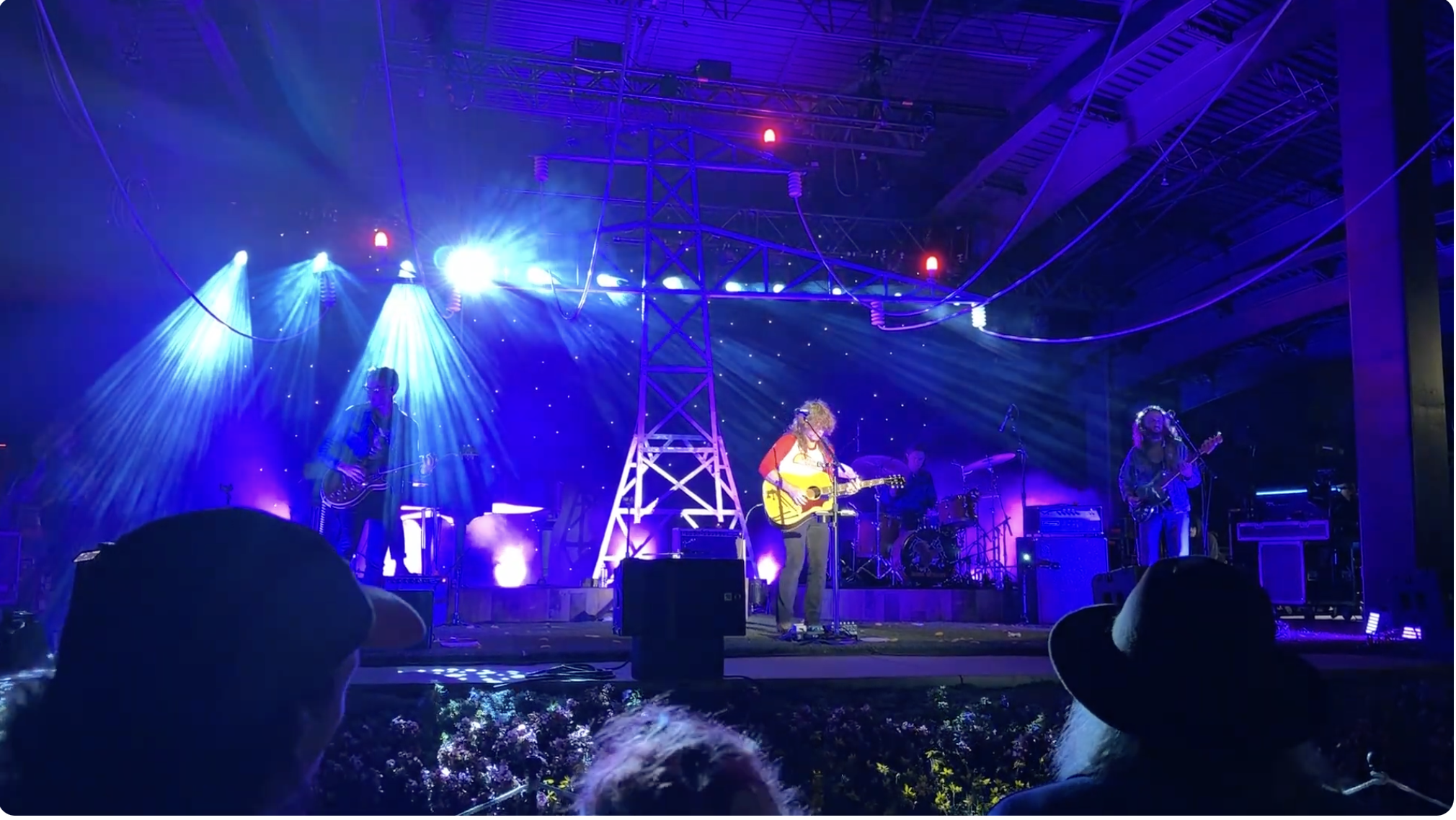
Great Communication Begins Long Before You Walk Onstage or Start a Team Meeting. Watch Jesse Welles perform “Siddhartha” live in Salt Lake City →🚀 Great communication begins long before you walk onstage, step into the boardroom, or start an important team meeting. It begins with the reps. Here in Salt Lake City, Sharon, Johnny, and I got in line at 3:00 PM to see singer-songwriter, and modern-day bard, Jesse Welles. At 3:05, the sky opened. For the next couple of hours, we sat through a total cloudburst under ponchos and a big umbrella as the pavement under our feet turned into a raging creek. My shoes were soaked. Johnny was very unhappy about the whole thing. Sharon, as usual, was the chill one. 😂 Eventually the rain stopped. We shook everything out, the doors opened, my shoes squelched as we walked in, and we got absolutely tremendous seats right up front. I’m telling you this because Jesse Welles exemplifies something I talk about with executives, leaders, and speakers all the time: You can hear that he has put in the reps. He has practiced. Jesse is a fabulous performer. I play guitar and used to sing in a band, and it’s obvious to me that he has been taking his craft seriously for a long time. The music is carefully crafted. That’s what it takes to become a great musician. It’s also what it takes to become a powerful communicator. Great Speakers Are Made Before the Audience ArrivesWhen someone gives an exceptional keynote, leads a high-stakes meeting, or answers a difficult question with apparent ease, we tend to notice the performance. We don’t see everything that happened before it. There’s the craft of creating the message. There are the words you choose. There’s the delivery and performance. And then there’s the willingness to do it again and again—paying attention, learning, adjusting, and getting better. Back in April, I flew to Dallas to see Jesse and his band. They were amazingly good then. Here in Salt Lake City? They were even better. They’ve done more than 100 shows together, and you can tell. That’s the part people sometimes miss when they see someone who looks “natural.” They’re seeing the outcome, not all the work that created it.
This matters whether you’re preparing for a TED-worthy talk, an investor pitch, a leadership presentation, a media interview, or a conversation with your team. Leadership itself is a function of communication: L=f(c). And the quality of that communication depends, in no small part, on what you do before the moment arrives. Practice Your Communication Like a CraftHere’s my micro-training for you. Take one important piece of communication you have coming up and treat it like a craft. Not something you vaguely think through while driving. Not something you glance at ten minutes before the meeting. And definitely not something you assume you’ll be able to “wing” because you know your subject. Craft it carefully. 1. Get Clear About the One Thing That Matters MostBefore worrying about slides, gestures, or eloquence, ask: What do I most want these people to understand, feel, or do because I communicated with them? Your expertise can actually work against you here. You know twenty things that seem important. Your audience needs to know what matters most. That clarity is at the heart of effective presentation skills for leaders. 2. Practice It Out LoudThinking about a presentation is not rehearsing a presentation. Your ideas change when they leave your head and have to travel through your mouth. Sentences that looked brilliant on the screen suddenly become impossible to say naturally. Transitions you thought were obvious disappear. Stories run long. Jokes don’t quite land. That’s useful information. Say the words. Hear them. Feel what happens when you actually deliver them. As I discuss in 7 Essential Tips to Elevate Your Public Speaking, purposeful practice isn’t about memorizing lines. It’s a chance to experiment with pacing, phrasing, tone, presence, and connection. 3. Go Full-OutDon’t rehearse at 40% and expect to perform at 100%. Stand up if you’ll be standing. Use your voice. Tell the story. Pause where you’ll pause. Make the point the way you intend to make it when the stakes are real. Do it as though the audience is already there. This is especially important with storytelling. A story isn’t merely information arranged chronologically. It is an experience you are creating for another human being. One of my most fundamental principles is:
If you want to go deeper on that, read Storytelling Is Key. 4. Pay Attention and AdjustNotice what works. Notice what doesn’t. Where do you lose energy? Where does your message become muddy? Which sentence suddenly makes the whole idea clearer? Where does a story create connection? Where are you trying too hard? Then adjust it. And do it again. This is where practice becomes much more than repetition. Practice is feedback. You aren’t trying to perfectly reproduce the last version. You’re discovering the best version.
That’s the ease we’re after. Not careless spontaneity. Earned spontaneity. Why Practice Makes You More Authentic, Not LessSome executives resist rehearsal because they’re afraid it will make them sound scripted. That’s a legitimate concern—if you’re rehearsing in order to memorize every syllable. But that’s not the kind of practice I’m recommending. When you know your material deeply enough, you stop spending precious mental bandwidth trying to remember what comes next. You become available to the audience. You can listen. You can notice a reaction. You can slow down. You can change a word. You can let a moment breathe. You can actually communicate rather than merely retrieve information from memory. That’s why great practice often creates more authenticity. You’re no longer trapped by the script. You’re free. It’s also one reason executive coaching can improve public speaking and influence: good feedback makes the reps more intelligent. You begin noticing things that are very difficult to see from inside your own performance. Watch What the Reps Look LikeHere’s a little evidence of what I mean. This is a snippet of Jesse playing “Siddhartha,” one of my absolute favorites. Listen to the words. Listen to the phrasing. Watch how completely Jesse and the band own the song without seeming to try too hard—and just crush it like fine wine grapes. That kind of naturalness and ease is earned. 🎥 Watch Jesse Welles playing “Siddhartha” in Salt Lake City As you watch, don’t just enjoy the performance. Watch the craft. That’s what more than 100 shows together can create. One Final ThoughtWhether you want to be a rock star, a powerful leader, or a truly great speaker, there are no shortcuts around the reps. And if you keep doing them, something magical happens. You don’t just become better at delivering one presentation. You become a better communicator. More flexible. And, every once in a while, you become someone capable of creating an experience people will sit through a downpour to have. If you’ve got an important talk, keynote, presentation, or leadership message that’s already good, but you know it could be great, let’s connect. That’s work I love doing. —John P.S. Jesse, if this somehow finds you: Thank you. You’re a courageous dude with a genius of a muse. Keep channeling that amazing stuff. I’d love to have you join me on https://livelikealeader.show |
LET’S CONNECT