Most executives prepare for a panel by thinking about what they will say.
That matters, of course. But here is what is easy to miss: even if you talk a lot, you will spend most of the panel not talking.
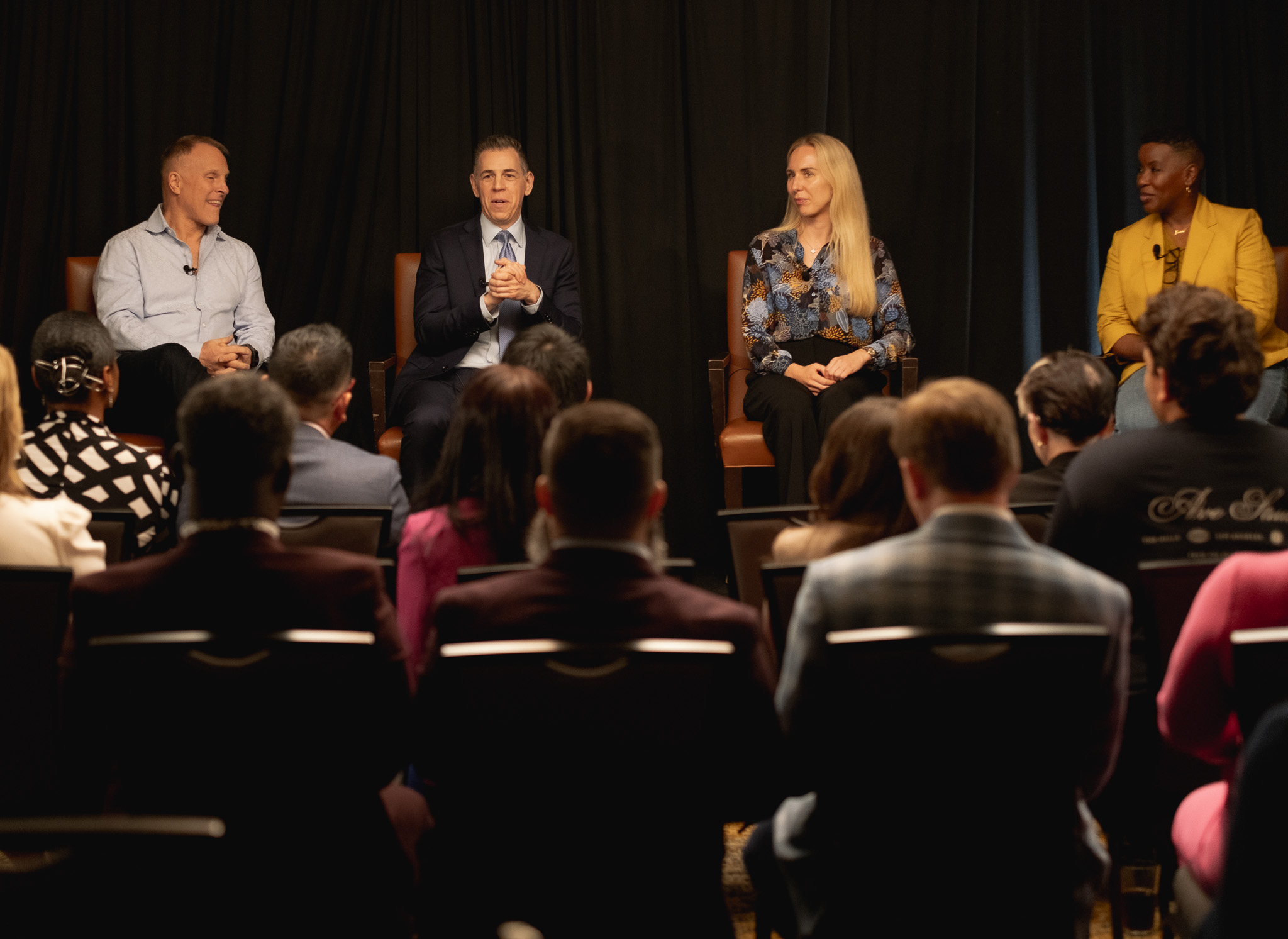
The audience is still reading you.
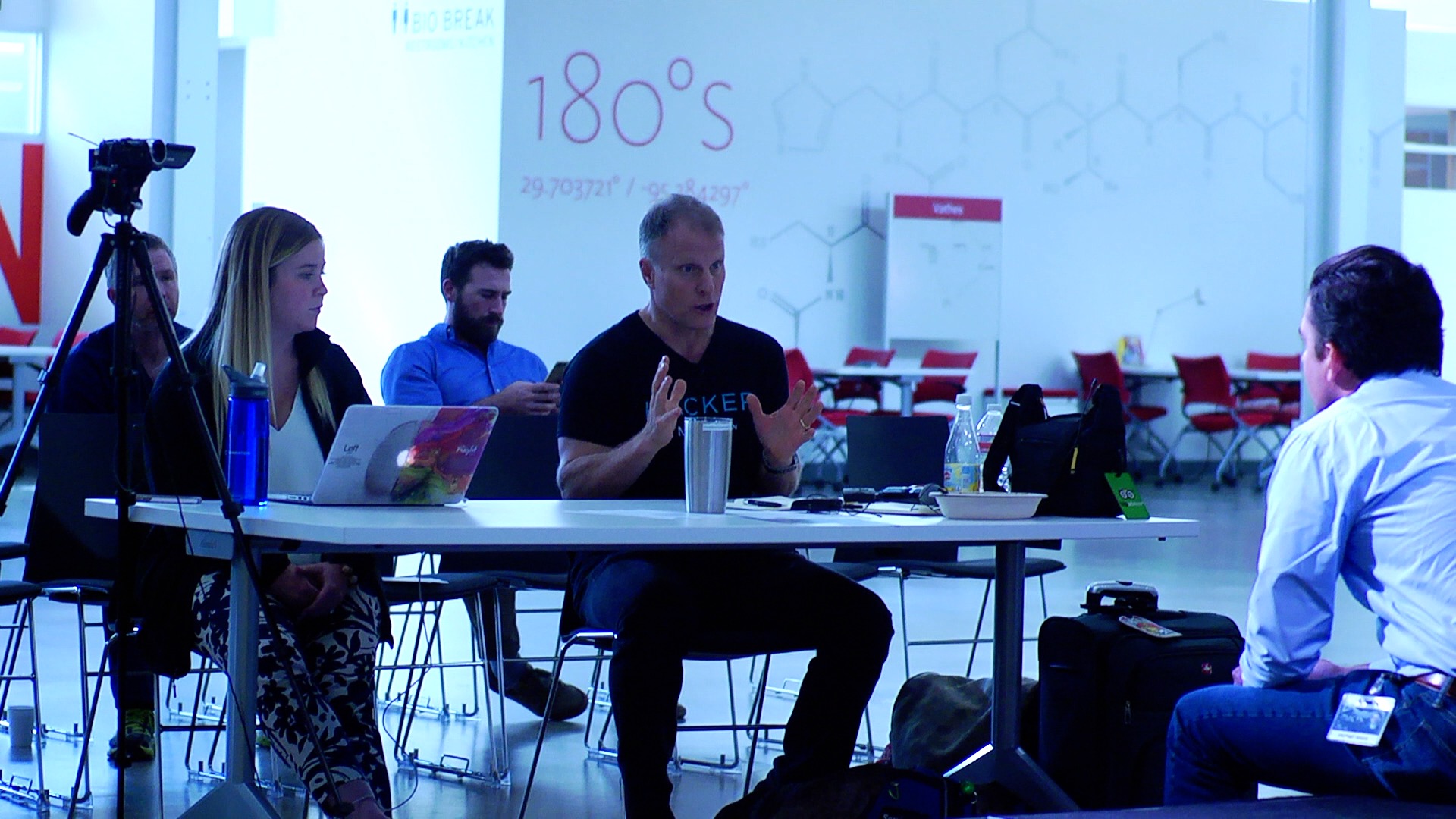
They notice how you sit, how you listen, what your face does when another panelist speaks, whether your hands look relaxed, and whether you seem engaged or simply impatient for your next turn.
That is why learning how to speak on a panel—especially when you are representing a company, field, or consequential point of view—is about more than preparing good answers. It is about being fully present, contributing something useful, and helping the entire conversation become more valuable.
The best panelists do not merely answer questions. They improve the conversation.
To speak well on a panel, prepare three memorable ideas, practice concise answers out loud, listen visibly, build on the other panelists’ contributions, disagree with respect, and finish before the moderator has to interrupt.
1. Remember That You Are Communicating Even When You Are Not Talking
Before you say a word, choose a stable, comfortable posture. Keep your hands visible. Look at the person who is speaking. Lean in naturally. If you agree, a small nod can show that you are following. If you disagree, stay curious rather than broadcasting your rebuttal with your face.
Also notice any self-soothing behavior that appears when you are under pressure. Tapping your foot, picking at your hands, swiveling in your chair, or repeatedly adjusting your clothing may help discharge nervous energy, but it can distract the audience and make you appear less grounded than you are.
Do not try to perform attentive listening. Actually listen.
That shift matters. When your attention leaves your own performance and moves to the conversation, your body often becomes calmer on its own. You also become far more capable of offering a response that feels alive and relevant rather than preloaded.
If you want to go deeper, explore the 3 Levels of Leadership Listening.
2. Prepare a Short Introduction That Establishes Emotional Credibility™
Most moderators will ask each panelist to introduce themselves. This is where accomplished people often make a strange mistake: they try to establish their professional credibility.
You do not need to.
Your title, biography, experience, and the simple fact that you were invited onto the panel have already established that you belong there. Reciting your résumé can actually tarnish that credibility by making it seem as though you are not sure the audience believes it.
Instead, establish your Emotional Credibility™.
Help the audience understand:
- Why do you care so much about this subject?
- How did you come to care about it?
- Why have you devoted so much of your time and energy to it?
A concise, emotionally connected version of your Origin Story can answer all three. It does not need to be dramatic. It needs to be authentic, purposeful, and short enough to serve the conversation.
For a deeper explanation, watch Share Your Origin Story and People Will Follow You Anywhere, then read If You Want to Connect Like a TED Speaker, Make It Personal.
John’s Leadership Principle: Professional credibility tells people that you know what you are talking about. Emotional Credibility™ helps them understand why they can trust you with it.
3. Prepare Out Loud, Not Just in Your Head
There is a saying among people who are good on panels and in the media: the people who are fast on their feet think in their seat.
If the moderator gives you the questions in advance, practice answering them out loud at least three or four times. Five or six is even better when the stakes are high.
This is not about memorizing a script. Memorized answers often sound brittle, and one interruption can knock the speaker off course. The purpose is to discover your best natural language before you are sitting under the lights.
Your early attempts may wander. Good. You are saying it the wrong ways first and getting them out of the way. With repetition, your answer usually becomes shorter, clearer, and more recognizably yours.
If you do not receive the questions, anticipate them. Consider:
- What is the moderator almost certain to ask?
- What will this particular audience care about most?
- Where might the panelists genuinely disagree?
- What question would be difficult but fair?
- What do you hope someone asks?
Then rehearse those answers out loud. You can find a fuller preparation framework in Executive Media Training: How Leaders Prepare for High-Stakes Interviews.
4. Decide on the Three Ideas You Want the Audience to Remember
You cannot control every question. You can control how clearly you understand your own point of view.
Before the event, identify the three most important ideas you want the audience to take away from you. Write each one as a single, clear sentence.
Then practice connecting at least one of those ideas to every likely question.
This does not mean ignoring the question or repeating the same slogan over and over. Answer the question honestly first. Then connect your answer to the message that will be most useful to the audience.
The language and examples can change. The underlying messages remain consistent.
That consistency is part of leadership. When people hear your point of view expressed in several relevant ways, they are more likely to understand it, remember it, and repeat it accurately later.
5. Answer Directly, Then Make the Answer Memorable
Panel answers need to be succinct. They also need enough life in them to be remembered.
Try this simple structure:
- Answer the question directly. Do not make people wait through two minutes of background to discover your point.
- Explain why it matters. Give the audience a reason to care.
- Offer one example, image, or short story. Make the idea concrete.
- Land the answer cleanly. Stop when the point has landed.
We do not want to be so brief that we remove the very thing that would make the answer meaningful. We also want to be succinct enough that everyone stays awake through the entire response. There is the art.
One of my favorite standards is: never tell a story without a point, and never make a point without a story.
You will not achieve that perfectly in every answer. Aim for it anyway.
6. Listen for Something Worth Building On
One of the fastest ways to distinguish yourself on a panel is to demonstrate that you are participating in the conversation rather than waiting to deliver your material.
When another panelist says something useful, reference it by name:
“I appreciate what Maria said about trust. I would add one thing…”
Or:
“David and I see this differently, and I think the difference may be useful to the audience…”
This shows that you are listening, processing, and evaluating ideas in real time. It also creates goodwill with the other panelists and helps the audience experience one coherent conversation rather than a sequence of unrelated mini-speeches.
Strong leadership presence is not demonstrated by occupying the most airtime. It is demonstrated by making the room smarter.
7. Disagree Without Becoming Disagreeable
A respectful disagreement can be one of the best moments on a panel. It introduces useful tension, clarifies the real choices inside the topic, and gives the audience a reason to lean in.
Do not manufacture conflict. But do not smooth every meaningful difference into mush, either.
When you disagree:
- Acknowledge the part of the other person’s point that you understand or share.
- Name the specific place where your view differs.
- Explain the experience, evidence, or principle behind your perspective.
- Keep the disagreement focused on the idea, not the person.
- Make clear why the distinction matters to the audience.
Civil disagreement is not a failure of the panel. Handled well, it is a service to everyone listening.
8. Put the Audience Ahead of Your Nerves
When you become self-conscious, your attention turns inward: How do I look? Do I sound smart? What do they think of me?
Those questions consume the mental capacity you need to listen, think, and connect.
So borrow the best advice I ever got from Snoop Dogg:
Don’t be nervous. Be at their service.
For a short reminder of what that looks like in this setting, watch On a Panel, Don’t Be Perfect, Be Present.
Focus on the message. Focus on the audience. Focus on the difference you are there to make.
This does not mean you will never feel nervous. It gives the nerves somewhere useful to go. Put your feet on the floor. Let your hands rest visibly. Exhale. Listen to the whole question. Then help.
The people in the audience are not there hoping you fail. The other panelists are human, too. Cross mind-reading off your job description and return to the work.
John’s Leadership Principle: Presence is not self-monitoring with better posture. Presence is what becomes possible when you stop performing yourself and start serving the people in front of you.
9. Finish Before the Moderator Has to Rescue You
A strong panel answer has an ending.
You do not need to use every fact you know or every example you prepared. Make the point, support it, and give the conversation back to the moderator.
A useful practice is to rehearse a short closing sentence for each of your three main messages. That helps you land the answer rather than circling it.
Then stop.
That small act communicates clarity, confidence, and respect for everyone else on the panel. It also makes the moderator much more likely to come back to you.
A Practical Panel Preparation Checklist
Before you walk onstage, confirm that you have:
- Researched the audience, moderator, other panelists, and purpose of the event.
- Prepared a brief introduction built around Emotional Credibility™, not a résumé recital.
- Identified the three messages you most want the audience to remember.
- Prepared one short story or example for each message.
- Anticipated the obvious questions, the difficult questions, and the question you hope they ask.
- Practiced your answers out loud several times.
- Decided how you will handle a meaningful disagreement.
- Confirmed the format, timing, seating, microphones, and whether audience questions are included.
- Chosen a stable posture that keeps your hands visible and helps you stay present.
- Reminded yourself that your job is to serve the audience and the conversation.
One Final Thought
When you speak on a panel, your expertise may have earned you the chair. It is not what will make the audience trust, remember, or recommend you.
What they will remember is how clearly you made the subject matter, how fully you listened, how generously you treated the other people onstage, and whether your point of view helped them see something differently.
Relax into your expertise. You have already earned the right to be there.
Now make the conversation better because you are in it.
Prepare for the Panel That Matters
If you are preparing for a consequential panel, media appearance, conference, board meeting, or leadership event, the right preparation can make your expertise much easier to hear, trust, and remember.
Explore private executive communication coaching for individualized preparation, or leadership communication programs for an executive team or group of experts. If you are not sure which path fits the moment, tell us what is coming up.