
You have a board presentation coming up. The project matters. Your team has worked hard, and you believe in your recommendation. Now you need to help the board understand what you’re asking them to do and why.
To present effectively to a board of directors, make the purpose clear, curate the evidence, explain the risks and tradeoffs, and prepare for questions. If you’re presenting as a team, rehearse how you hand off and listen to one another. Give the board a clear recommendation and a clear next step.
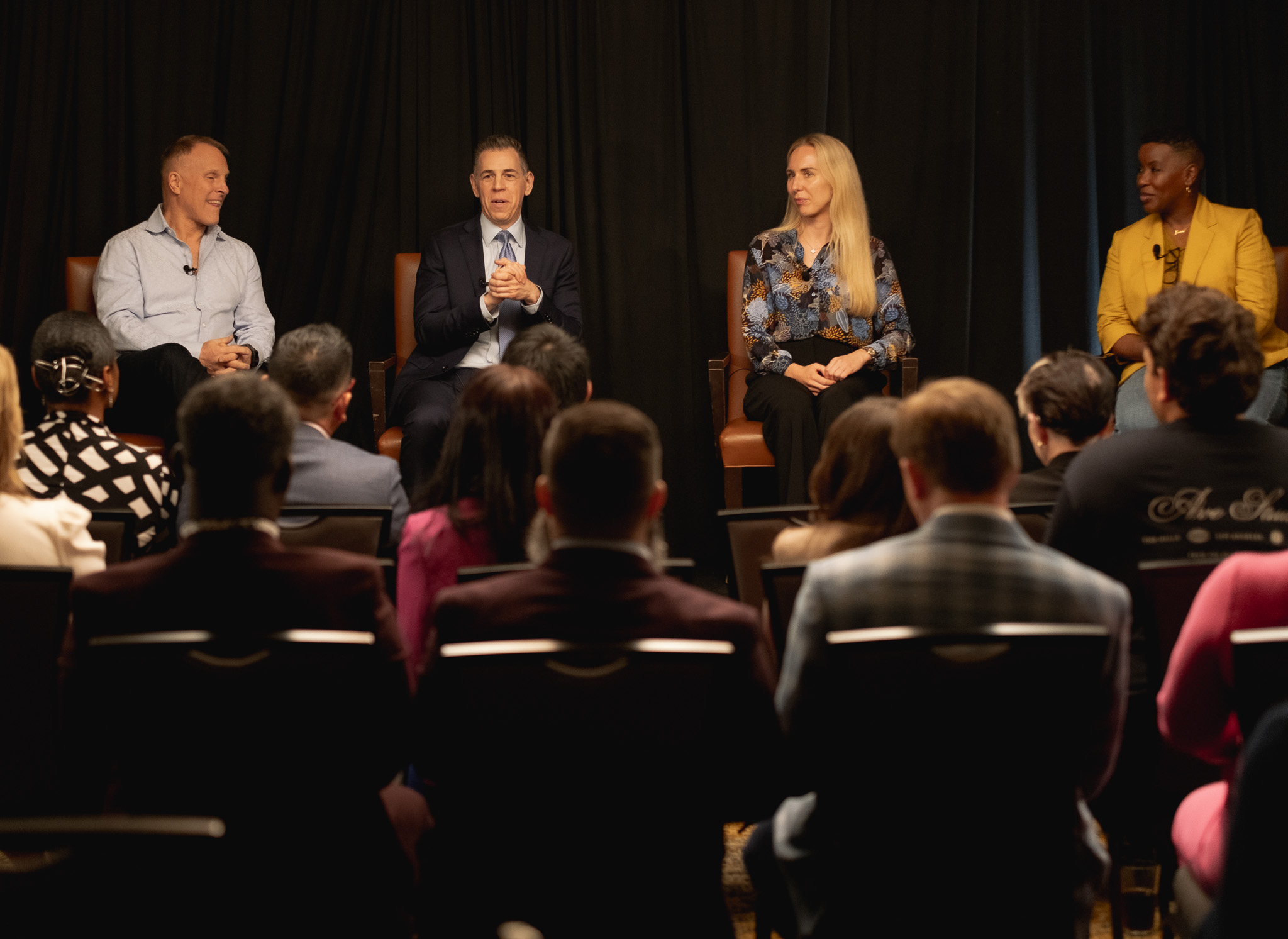
That last part about the team is easy to overlook. It was an important part of my preparation with Maulik Nanavaty’s team before a Boston Scientific board presentation with continued funding at stake.
We worked on strategic messaging and phrasing, as you might expect. But we also worked on how they demonstrated their respect for one another.
They already felt it. They simply weren’t saying it.
Instead of a bare “Now I’ll pass it to my colleague,” I encouraged each presenter to share something specific they valued about the person taking over. An illustrative handoff might sound like this:
“Now I’ll pass it to Wendy, who I’ve come to respect deeply during this project for her ability to see both the big picture and the details that matter.”
We also practiced listening. When a colleague was speaking, the rest of the team needed to stay present. Checking a phone or visibly disappearing into your own notes communicates something very different from listening with interest.
Afterward, Maulik told me the board had commented positively on the team’s demonstrated affinity and respect. The initiative received funding.
The handoffs were one part of our preparation. What stayed with me was that the board noticed the respect the team usually left unspoken.
The board needs your thinking. They also need to understand the people they’re trusting to carry it forward.
1. Build your board presentation around its purpose
Before you open your slides, write down what the board needs from this conversation. Is this a decision, an update, a request for guidance, or a discussion of a developing risk?
For a decision, complete this sentence:
“We’re asking the board to decide ______ because ______.”
If it’s an update, name what has changed and why that change deserves their attention. If you need guidance, identify the question you want their help answering.
Then ask:
- What does the board need to understand?
- What evidence most strongly supports our recommendation?
- What risks, uncertainties, and tradeoffs must they see?
- What alternatives have we considered?
Use those answers to choose what belongs in the presentation.
One of the easiest mistakes is treating the meeting as an opportunity to prove how much you know. You explain every step, include every qualification, and take the board into details that took your team months to understand.
Often, you already have more credibility in that room than you realize. Use your expertise to help the board see what deserves its attention.
I sometimes tell people, “Just give us the treats.” Give us the most important things you know. Do the hard work of choosing them.
Curating doesn’t mean hiding inconvenient information. A material risk belongs in the conversation. Supporting calculations can live in the pre-read, appendix, or backup slides, according to the board’s process.
John’s Leadership Principle: Curate your knowledge. Help the board see what matters and why.
2. Open with what matters now
“Thank you so much for having us. It’s such an honor to be here…”
I understand the impulse. But those opening seconds are valuable, and the board may have been listening to presentations all day.
A brief acknowledgment is enough. Then establish why this conversation matters now.
For a funding discussion, an illustrative opening might be:
“Today we’re asking for a decision about the next phase. I’ll show you what we’ve learned, the risk we still need to resolve, and why we recommend moving forward.”
That opening gives the board a way to listen. They know the purpose, the question, and what you’ll cover.
Fit the opening to the assignment and agenda. You don’t need to manufacture suspense. You do need to make the relevance clear.
Yes, they’re board members. They’re also human beings. Give them a reason to pay attention.
3. Make the evidence easy to understand
An audience can understand every word and still leave with little to hold on to.
This is where neuroscience belongs in the conversation. Understanding language involves a distributed network of brain regions. Wernicke’s area is familiar from the traditional account of language comprehension, but the science is more complex than a single comprehension center. Research on the language comprehension network
In my teaching, I sometimes nickname Wernicke’s area the “in one ear and out the other” area. It’s a playful metaphor for an experience we’ve all had: you follow what someone is saying, but afterward you have little to hold on to. It isn’t a literal description of what that brain region does.
For your board presentation, use that distinction as a preparation question: what do you want the board to be able to explain after you leave the room? Give them a clear idea, the evidence behind it, and its connection to the decision.
Spell out unfamiliar acronyms. Use language people can follow without a translation. Explain what a number means for the business, rather than assuming its significance is obvious.
When a brief story would illuminate the point, tell it. For a board presentation, that could be a customer interaction that revealed a problem, a moment in testing that changed your thinking, or an experience that explains why your recommendation matters.
Give us enough to see what happened. Then connect it to the decision.
A useful sequence is:
- Explain what happened.
- State what it helped you understand.
- Show the broader evidence.
- Explain how it affects your recommendation.
A memorable anecdote doesn’t establish how common a problem is. Keep the evidence alongside the example, and make the limits of that evidence clear.
4. Rehearse the team handoffs and the listening
Your presentation continues while somebody else is speaking.
How do you listen? What do you communicate when you hand over the conversation? How do you respond when a colleague makes an important point?
The Boston Scientific preparation brought this into focus for me. The team had genuine respect for one another. Our work helped them express it.
Practice your handoffs together. Find one true, specific thing you respect about the next presenter that’s relevant to the work. Say it briefly and naturally.
This isn’t an invitation to turn every transition into an awards ceremony. A sentence can do the job.
Then listen. Stay with your colleague instead of checking your phone or visibly rehearsing your own section. You can help establish the tone of attention in the room.
John’s Leadership Principle: Put your genuine respect on loudspeaker. Let people see the confidence you have in one another.
5. Prepare for difficult board questions
When a board member challenges your recommendation, it’s easy to hear an attack.
Try another interpretation first: this person is being rigorous. They care about whether the idea will work, and they’re helping pressure-test it.
That frame gives you room to stay curious.
Answer the actual question. If you need to clarify it, ask. If there’s a real weakness, acknowledge it and explain how it affects your thinking.
An illustrative response might be:
“You’re right to question that assumption. Here’s what our evidence supports, and here’s what we still need to test.”
Then give the substance. A respectful opening is useful only if an answer follows it.
Before the meeting, practice the questions you least want to hear. Ask a colleague to challenge your assumptions, the evidence, and the alternatives. Decide who will answer questions in each area so the team doesn’t talk over one another.
Where you don’t know, prepare to say so and explain how you’ll find out.
During the meeting, answer clearly and let the answer land. Resist the urge to say it again, then again a slightly different way. Over-answering can make a sound answer feel less certain.
6. Rehearse for the time and format you have
My dad used to say, when I practiced my speeches, “Son, slow down. I can’t listen that fast.”
That’s useful board-presentation feedback.
Rehearse aloud, with the actual team, inside the time you’ve been given. Include transitions and room for questions. Notice where you rush, where the explanation becomes difficult to follow, and where a slide asks people to read while you ask them to listen.
I’m wary of absolute rules about slide counts. The number alone doesn’t tell you enough. The board’s required format, the purpose of the meeting, and what’s on each slide matter far more.
If a slide contains a dense chart, tell the board what to look for and give them time to examine it. If the deck also serves as a detailed pre-read or permanent record, preserve that function. Use an appendix or a separate presentation version where the board’s process allows it.
Test the actual listening experience: can someone follow your thinking without racing to keep up?
7. Close with the recommendation and next step
Avoid letting the last random question become your ending.
When the chair and agenda allow, reserve a brief close after Q&A. Remind the board of your recommendation, the most important reason behind it, and the decision or next step needed. If the discussion changed your recommendation, say so.
And let them see that you care.
I think it’s a mistake to assume a board doesn’t want to be inspired. I mean genuine commitment to work that matters, expressed in a way that fits the meeting.
When you hide your passion in order to look competent, you’re losing a huge ally.
Show them the thinking. Show them the evidence. Let them see why you’re committed to getting this right.
Board presentation preparation checklist
Before you walk into the room, ask:
- Can we state the purpose and requested decision clearly?
- Have we included the essential evidence, alternatives, risks, and tradeoffs?
- Can we retrieve supporting detail easily if we’re asked?
- Does our opening establish why this matters now?
- Are our examples brief, relevant, and accurate?
- Have we practiced our handoffs and how we listen to one another?
- Have we rehearsed difficult questions and agreed who will answer them?
- Does the presentation fit the available time and the board’s process?
- Do we know how we’ll close and what next step we’re requesting?
Getting help with a consequential board presentation
Preparing on your own matters. So does getting a perspective from outside your own work.
Consider coaching when a consequential decision is approaching, when your team knows the material but struggles to communicate its significance, or when your responsibility has changed and your presentation needs to rise with it.
You can explore private executive communication coaching or leadership communication programs for teams. If you’re weighing the investment, the coaching cost and value guide explains the options.
Have a board presentation coming up? Tell me what’s at stake. We can talk about what you need the board to understand and whether working together would help.